Work Experience
Forward Deployed Robotics Engineer | FieldAI
- Forward deployed engineer of record for FieldAI’s two largest industrial accounts, supporting 9 customer sites and 20+ Boston Dynamics Spot robots
- Migrated production robots from ROS 1 to ROS 2 on site, preserving ~25 hours of operator-authored keep-in/keep-out zones
- Ported the PTZ object-tracking node from Python to C++, measuring 3.5x less CPU, 2.9x less memory, and 14x faster startup at production message rates
- Root-caused localization drift, code regressions, and network blockers from robot logs, pose-graph error plots, and thermal dashboards
- Issued fleet-wide advisories that kept defective software off customer robots, and drove same-day fixes when regressions blocked live missions
- Owned software versioning and release readiness across 8 release lines, reviewing and approving every change that reached customer robots
- Authored a software validation proposal for engineering leadership, raising the bar for how thoroughly software is tested before it reaches the field
- Established release management and code ownership practices adopted across the robot fleet
- Rolled out autonomy-first intervention logging across three accounts, making every operator takeover a reviewable data point
- Wrote onboarding documentation, runbooks, and pre-deployment checklists, and mentored new forward deployed and field application engineers through live incidents
Robotics Deployment Engineer | Path Robotics
Multi Arm Robot Deployment

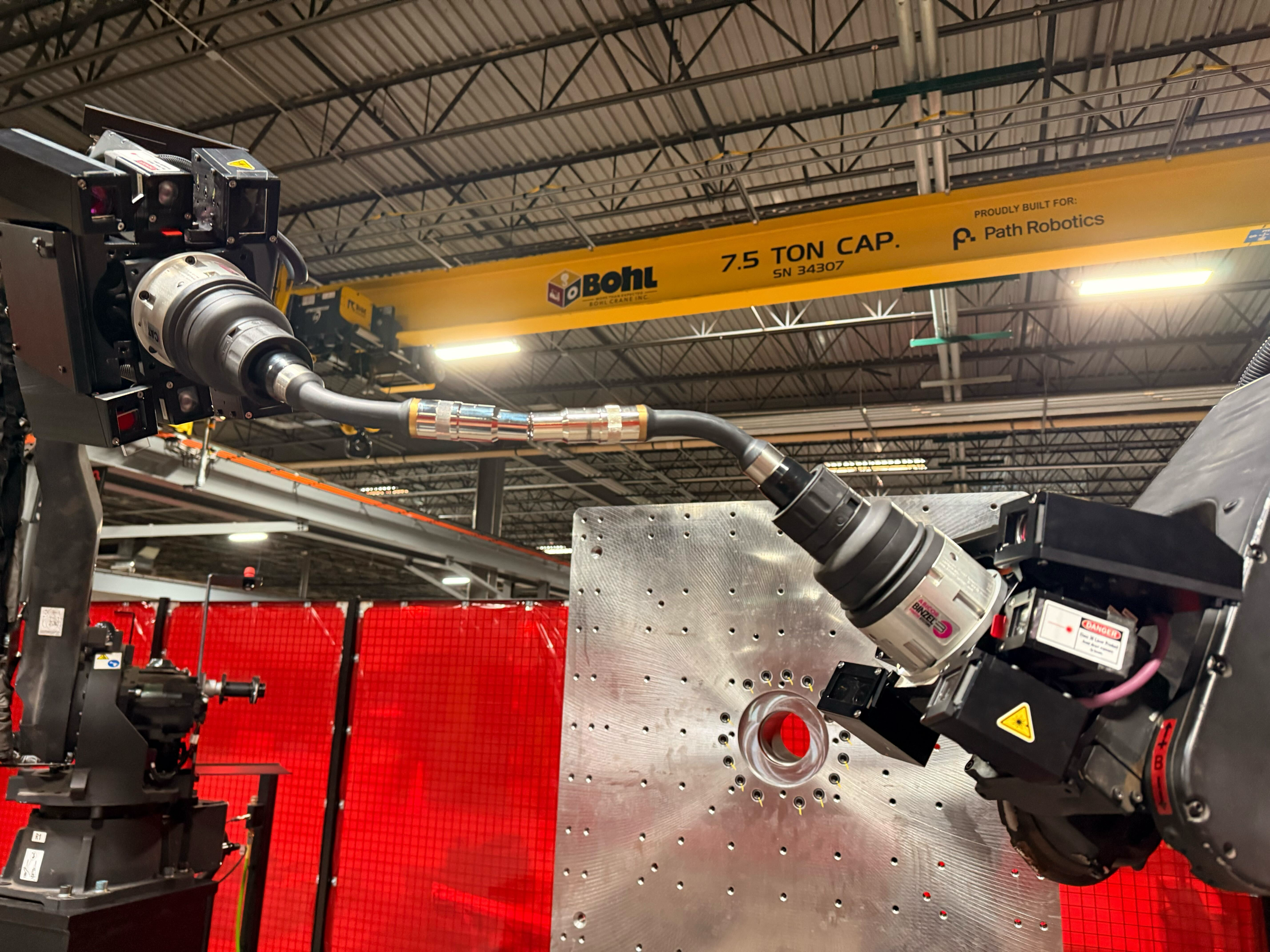
- Deployed the company’s first AW-3 multi-robot production system at a customer site
- Developed calibration plugins and automation scripts using Python, Bash and C++, cutting deployment bring-up time by 30%
- Served as codeowner for robot configurations (URDF, MoveIt, clearance planner configurations)
- Built, debugged, and deployed robotic applications in ROS.
- Created documentation and trained new engineers, ensuring smooth knowledge transfer to the operations team
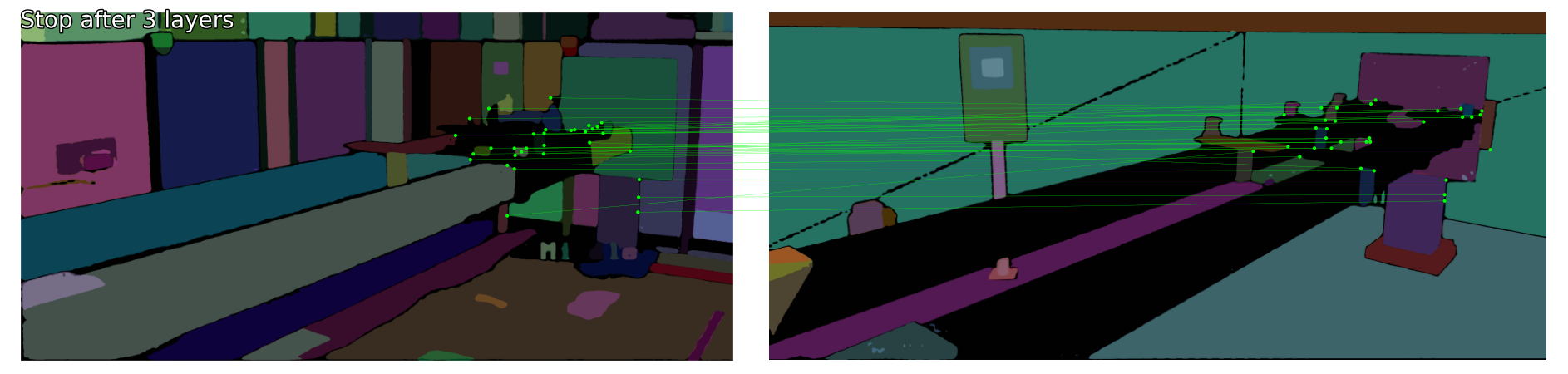
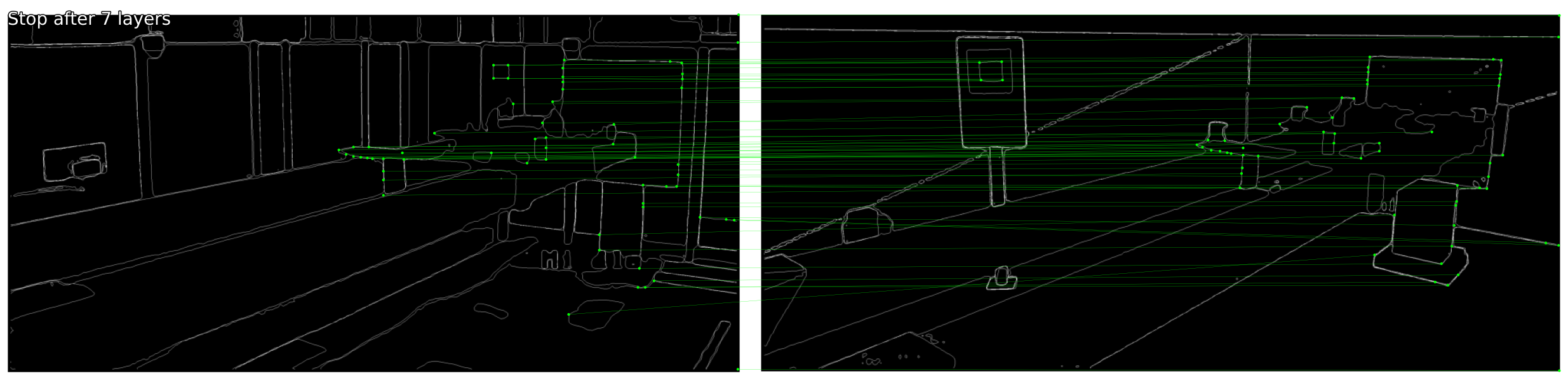
- Experimented with Meta’s Segment Anything Model (SAM) to automate URDF validation by: extracting segmentation masks from CCTV images of robotic systems, generating corresponding masks from the 3D URDF model using camera intrinsics/extrinsics, and applying LightGlue for feature matching and validation
- Wrote approach strategies and workflows in Python for Path Robotics’ flagship pick, place and weld (AF-1) robotic system, achieving a welding accuracy of 95%
- Computed spatial transforms and implemented a software testing and release pipeline for production deployment of a custom perception hardware package, achieving higher scan cloud point densities, increased seam accessibility, and improved non-rigid registration performance.
Raw Segment Anything Model (SAM) Results + LightGlue Output:
Final Processed Results + LightGlue Output:
First multi-robot system deployment: